
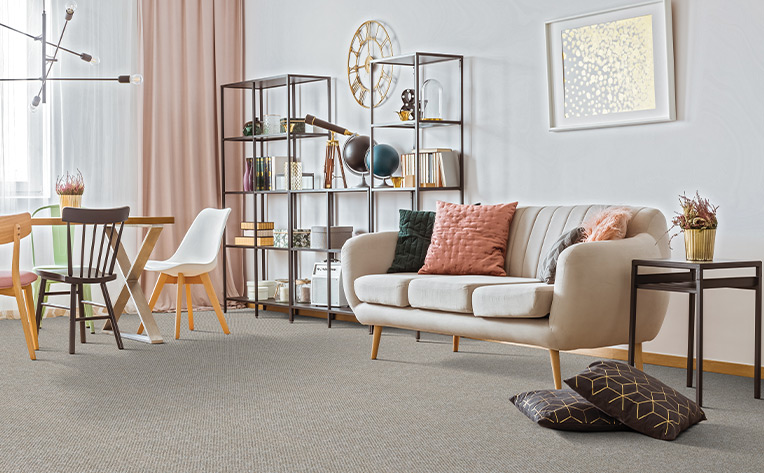
Laying carpet over carpet is more common than you might think, and it can work in two different ways. The first is as simple as rolling out a new area rug over your existing wall-to-wall carpet. The second involves installing new wall-to-wall carpet directly over the old one, which takes a bit more planning. Here's an overview of both methods:
An area rug over carpet is always a safe choice. It refreshes the look of a room without any installation work, defines a space within a larger room, and can be changed out easily. Low-pile rugs on low-pile carpet work best.
New wall-to-wall carpet can go over existing carpet, but only if the existing carpet is low-pile, flat, and in good condition. High-pile, plush, shag, or unevenly worn carpet underneath creates tripping hazards and should be removed first.
Before layering, confirm that doors can still open freely and that floor vents will not be blocked. The added height of two carpet layers can create clearance problems.
When in doubt, remove the old carpet. If the existing carpet is worn, uneven, or already over padding, the cost of removal is usually worth it compared to the safety and warranty risks of installing over it.
Whether you want to refresh a room with a new area rug or replace your flooring without the hassle of a full renovation, laying carpet over carpet is a practical solution for many homeowners. As your friendly flooring professionals, we're here to help you find the right fit for your home. Read on to explore both options and find a floor you'll love for years to come.
One of the easiest ways to update a carpeted room is to lay an area rug over your existing wall-to-wall carpet. A well-chosen rug can define a seating area, add a pop of colour or pattern, and make a neutral carpet feel intentional again. Here are a few tips to point you in the right direction.
Pile height refers to the length of the fibers in a rug, and it plays a bigger role than most people expect when layering over carpet. Since carpet already has some natural give to it, you want a rug that adds visual interest without adding too much height underfoot. Layering two thick, soft surfaces can create an unstable feel that may become a tripping hazard.
Area rug sizing matters more than most people expect, and it's worth thinking through before you buy. A rug that is too small tends to look like an afterthought, so when in doubt, go bigger.
In a living room, choose a rug large enough to sit under the front legs of your furniture to anchor the seating area and make the layered look feel finished and intentional.
To keep your rug from shifting, use a rug pad designed specifically for carpet-over-carpet use. Not all rug pads work the same way, so it's worth getting the right one.
Standard non-slip pads are built to grip hard floors and will not perform as well on carpet.
Carpet-specific pads grip the fibers below to reduce shifting and prevent edges from curling.
In a low-traffic bedroom a lighter rug may stay put on its own, but in a living room or hallway, a rug pad is worth the investment.
There is no hard rule when it comes to colour, but contrast tends to work better than matching. A rug that is noticeably lighter or darker than the carpet beneath it creates a clear visual distinction that makes the layered look feel deliberate rather than accidental.
A lighter rug opens up a space and makes it feel airier.
A darker rug anchors the seating area more firmly and holds up better in high-traffic spots or areas prone to spills.
A patterned rug over a solid carpet adds depth and visual interest while masking traffic marks and stubborn stains.
If you've decided that new wall-to-wall carpet is the right move for your space, here's what you should know before getting started.
Ensure that all doors can still swing open freely with the added height of a second carpet layer.
Check that floor vents will not be blocked once the new carpet is in place.
Any unevenness underneath your existing carpet will show through through the new layer and become more pronounced over time. Certain carpet types should always be removed before a new installation:
High-pile carpet
Shag carpet
Unevenly worn carpet
Laying new carpet over any of these conditions creates an unstable surface and puts extra wear on your new floor.
When installing new carpet, tack strips are used to hold the edges in place around the perimeter of the room. Laying new carpet over existing carpet can complicate this process and may void your warranty. Here's what to keep in mind:
New tack strips need about two inches of clearance along each edge, which means trimming back the existing carpet.
If there is no room for tack strips, concrete nails and carpet glue are an alternative.
If the original tack strips need to come out, that's usually a sign to remove the old carpet entirely, since nothing will be holding it in place anymore.
Pro Tip: When in doubt, pull up the old carpet. The cost of removal is often less than people expect, and starting from a clean, stable subfloor makes a real difference in how your new floor looks and holds up for years to come.
Not sure where to start? Let us come to you. Book a free in-home estimate today and get expert guidance on the perfect floor for your home.
Now that you know what it takes to layer carpet over carpet, you're already ahead of most homeowners walking into a flooring decision. Whether you're freshening up a room with a new area rug or planning a full carpet replacement, the right foundation makes all the difference.
The best way to know if a floor is right for your space is to see it in person. Colours and textures look different in your living room than they do in a showroom. That's why we bring the samples to you. Order up to 6 samples and see how they look with your furniture, your paint, and in your home's natural light. Don't wait until you're standing in a store to make your decision. Your perfect floor is closer than you think, so order your samples today.
Yes, and it's a popular way to refresh a room without replacing the flooring underneath. It works best when the base carpet is low-pile and in good condition. A low-pile rug on low-pile carpet sits flat, defines the space, and adds colour, pattern, or texture. High-pile and shag rugs are less ideal since two thick soft layers create an unstable, spongy surface underfoot.
Flat-weave and low-pile rugs are your best options. Styles like kilims, dhurries, and woven cotton rugs lie flat without shifting and hold their edges cleanly. Avoid high-pile, shag, or heavily tufted rugs over carpet as they create an unstable surface and tend to bunch and shift underfoot. For material, wool and wool-blend rugs hold up well to the compression that comes with layering, while synthetic options like polypropylene are a durable choice for higher-traffic areas.
Neither is a rule, but contrast generally works better than matching. A rug that is noticeably lighter or darker than the carpet beneath it makes the layered look feel intentional rather than accidental. A lighter rug opens up a space and makes it feel airier. A darker rug anchors the seating area and holds up better in high-traffic spots. A patterned rug over a solid carpet is often the most effective move regardless of tone.
A rug pad designed for carpet-over-carpet use is the most reliable solution. Standard non-slip pads grip hard floors and will not perform the same way on carpet. Carpet-specific pads grip the fibers below, reduce shifting, and prevent edges from curling. Anchoring furniture legs on top of the rug edges also helps keep things in place in a seating area.
A rug pad is not strictly required, but it is strongly recommended. Without one, an area rug on carpet is prone to shifting, bunching, and curling at the edges, especially in high-traffic areas. A carpet-specific pad holds the rug in place, creates a safer surface underfoot, and reduces friction between the rug backing and carpet below that can cause wear on both surfaces over time.